The Actor’s Curse: A Tale of Twisted Fate 2026 Review
The Actor’s Cure brings us into the world of low-budget filmmaking with its horror anthologies approach. (In which case, shouldn’t the title be Tales of Twisted Fate instead of a tale?) Admittedly, the concept is great, each of the four shorts, as well as the wraparound story featuring people who work in the film industry. The film begins with a bitter washed-up actor (Jon DeBartolo), discovers an old journal outside his apartment door. The man decides to write and tell some fictional stories about people who he has worked with in the past that he attributes to the cause of his personal downfall, and thus begins the tales.
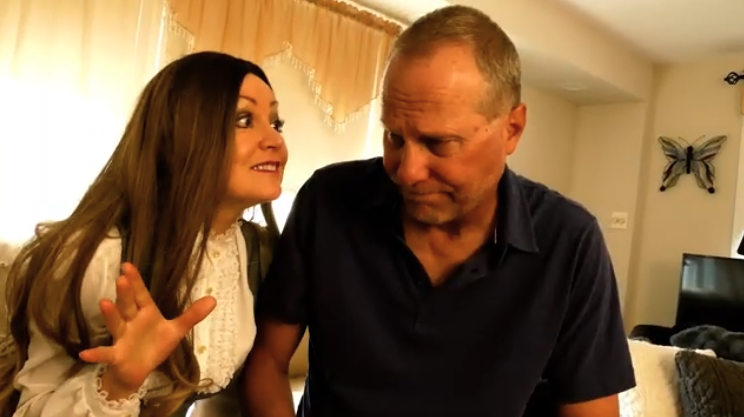
Don’t you just love it when actors go over the top!
The quality of The Actor’s Cruse is rough though, each of the short films feel like home movies or student films with their basic cinematography and over exposure shots. There are moments where two characters will just be talking between a A and B shot with nothing really going on, causing the pacing of the film to come to a standstill. There are Facetime conversations where it’s clearly a still picture of someone’s hand holding a phone, which might be fine for a few seconds but they cut to it way too much where it stands out. Most of the locations used are in people’s bedrooms or houses. That being said, The Actor’s Curse does have some solid gore and particle make up effects which did help to bring up the quality a bit. When the actors embrace the over the topless of the situations is when the films enter their best moments.
The opening segment, "The Director's Demise," is helmed by Derek Braasch and follows a predatory film director (Robert Gutierrez-Spagnoli) who encounters a surprisingly compliant new actress who does not mind his hands approach to filmmaking. Despite the director's abrasive behavior and the hostility, he fosters on set, his new recruit remains curiously undeterred. While the narrative follows a somewhat predictable trajectory, the introduction of supernatural elements provides a late-act shift, though the execution feels slightly underdeveloped and sadly does not amount to much. The short features impressive practical effects during a notable sequence of graphic violence—specifically involving a visceral injury to a male character’s, special parts.
Director James Panetta follows with 'The Producer's Plight,' featuring Debbie D as Victoria, a manipulative film producer. Victoria finds sport in psychologically pitting her actors against one another, maintaining her cold indifference even after her machinations lead to a tragic suicide. While the narrative follows a somewhat predictable trajectory as the first film, (with more pain delivered to another male character’s, special parts) the film’s conclusion is fairly satisfying, and the on-screen depiction of gunfire is notably well-executed. Although the theme of 'twisted justice' mirrors the preceding segment, the short remains an engaging exploration of a truly antagonistic character.
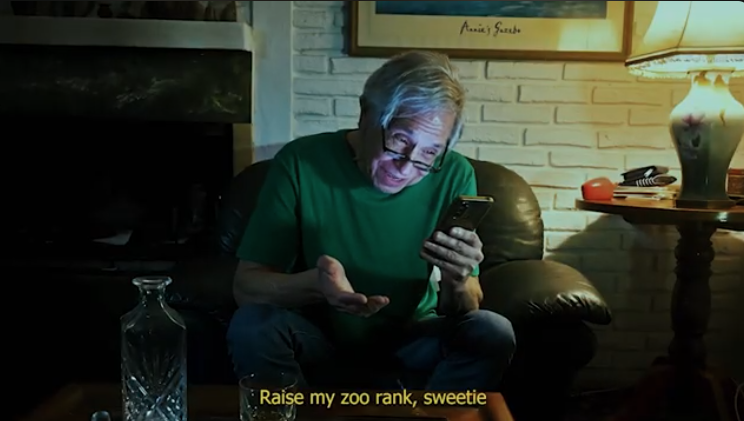
Much of the third segment takes place with this actor in this chair.
Despite being primarily in Spanish, the third installment of the series, The Writer’s Woe, suffers the most. Written and directed by Marcelo Fabani, the film follows a philandering author commissioned to write a documentary on the esoteric subject of South American vampires. There is this ancient text suggesting that "vampiric conquistadors" were intentionally deployed by the Spanish Crown centuries ago to subjugate the region, which is a cool idea in itself. But however, much of this segment features the characters sitting down and talking, with little action to keep things interesting. It also baffles me that there is a main facetime call happening with one-character speaking Spanish and the other speaking English. Like, they can understand each other’s languages but either one doesn’t know how to speak the other language. My personal theory is they had a actor who could only speak Spanish, who had to interact with a actor who could only speak English, which just makes for a odd scene.
Finally, the anthology concludes with The Makeup Artist's Misfortune, written and directed by Will Devokees. The film follows a vigilante makeup artist (Brooke Ashley) who targets industry abusers; however, her plans to flee town are thwarted when her latest victim—now severely disfigured—corners her at home seeking revenge. Notably, this segment features the most impressive cinematography, lighting and practical effects of the collection, specifically a strikingly realistic acid-burned face that is effectively enhanced by high-contrast shadow work. But it is let down by Brooke Ashely’s performance, as she comes off as flat and lacks the range to really make the tension work here.
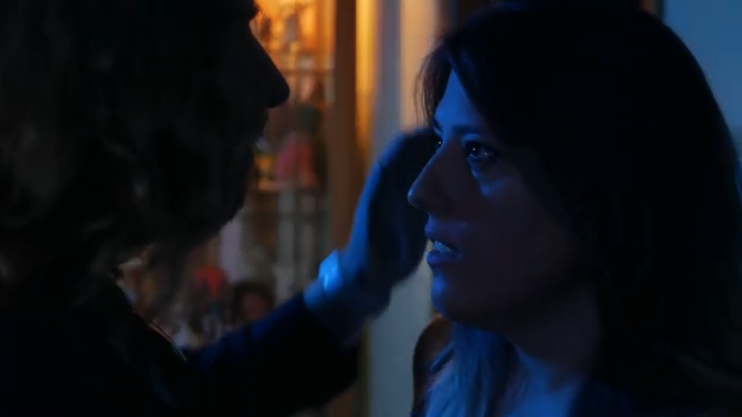
Things get close and personal for this make up artist.
Overall, The Actor’s Curse: A Tale of Twisted Fate, is a mixed bag. There are some laughs, a couple interesting ideas and even a decent amount of more-or-less gratuitous nudity to keep things interesting. But overall, the technical elements and low-budget nature of the production hold it back. Hopefully all the directors and actors used this as a learning opportunity and a chance to enhance their craft.